
The Merciful Olive
Κύριε ἐλέησον
geodinok
1/23/20262 min read
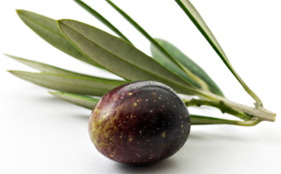
Mercy Soap derives it’s name from the relationship that exists between the words "mercy" and "olive" in the Greek language.
here is the story...
In the Greek language, the words mercy ("eleison" in Greek) and olive ("elaion" in Greek) both share the same linguistic root. That seems to be a curious association. But we also find events and parables in the Old and New Testaments, both of which have ties to the Greek language*, that relate God's mercy to either the olive tree or olive oil.
more on this fascinating topic...
God's Mercy, the Olive Tree, & Olive Oil
In the Old Testament we find the image of the olive tree in Genesis, where Noah sends out birds after the flood, one after the other, to find out whether or not there is any dry land. One of them, a dove (and this is significant because a dove represents the Holy Spirit) brings back a small twig from an olive tree. This conveys to Noah and those with him in the ark the news that the wrath of God has ended. Also in the Old Testament, we find the anointing of kings and priests with olive oil that is poured over their heads (Psalm 133:2). This is an image of the grace of God (divine energies) coming down and flowing over them. In the New Testament, we find the parable of the good Samaritan, who pours olive oil on the wounds of the unfortunate traveler to soothe and heal him. These scriptural references to the olive (tree and oil) are essentially descriptions of God's mercy.

Lord Have Mercy
Digging deeper into the topic of God's mercy, we look at the Hebrew word in the Old Testament that is translated as "mercy" in English and "eleison" in Greek . That Hebrew word is "hesed" and it's literal meaning is steadfast love.
This, then, provides us with a deeper insight into what it means to ask for God's mercy. By saying "Lord have mercy" ("Kyrie eleison") we're asking God to soothe, heal, and protect us and to show us His steadfast love. In this sense, mercy does not refer so much to some judicial acquittal but to the love and compassion of God.
* The OT had been translated into Greek and this was in common use in Egypt during the time of Jesus. Jesus offered no objection to this Greek translation. The NT, of course, was originally written in Greek.
Mercy Soap Company
SITE IS UNDER CONSTRUCTION
Contact
geodinok@mercysoap.com
© 2025. All rights reserved.